Monday, October 12, 2020

Sonorous ACCORDION and LAXMIKANT-PYARELAL Symphonic Orchestra

Sonorous ACCORDION  and  LAXMIKANT-PYARELAL Symphonic Orchestra


ACCORDION, a box-shaped musical instrument driven by the  bellows is widely used in Hindi Film Music. It sounds sonorous when orchestrated for film songs. Many music directors have used ACCORDION in their songs. 


This sonorous musical instrument is played by various accordionists, the musician playing Accordion.  Many accordionists can be named.  Vistasp Balsara who started playing for Raj Kapoor’s ‘Awaara’ and continued in many of the hit songs composed by Shankar-Jaikishan. 


Accordionist Goody Seervai started with music director Naushad for ‘Dastaan’ 1951. Later Goody Seervai also played for Shankar-Jaikishan and O P Nayyar. 


Enoch Danial was one of the finest accordionists played for music director Hemant Kumar in ‘Bees Saal Baad’.


In the sixties and  seventies Kersi Lord also played the accordion for many songs. Kersi Lord was a multi-instrumentalist.  Interestingly music director Anil Biswas was also a good accordionist.


Through the songs of ‘Sangam’ 1963, ‘har dil jo pyar karega another specialist accordionist Sumit Mitra who claimed to have played the accordion for 13,000 songs, started with Shankar-Jaikishan. After the death of Jaikishan Sumit Mitra permanently shifted to Laxmikant-Pyarelal orchestra and played for the duo for many years. 

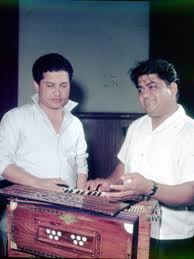
                                              Laxmikant-Pyarelal & accordionist Sumit Mitra

Undoubtedly Shankar-Jaikishan has utilized the accordion to the maximum. More than 50 %, estimated, of the songs composed by Shankar-Jaikishan have been orchestrated with Accordion. Listing out a few hit songs orchestrated with Accordion by various music directors. 


Naushad

--Dil Dhadak Dhadak ...M.Rafi-Suraiyya ‘Dastaan’ 1950

--Tara Ri Tara Ri ….    M.Rafi-Suraiyya ‘Dastaan’ 1950


Shankar-Jaikishan

--Awara Hoon  … Mukesh  'Awaara’ 1951

--Ek Bewafa Se  ...Lata     ‘Awaara’   1951

--Sunte The Naam ...Lata   ‘Aah’ 1953

--Pyar Hua Ekrar Hua ….Lata-Manna Dey   ‘Shree 420’

--Aaja Sanam Madhur ….Lata-Manna Dey  ‘Chori Chori’  1956

--Chhotisi Ye Duniya ….Kishore Kumar ‘Rangoli’ 1961


Datta Ram

--Mastibhara Hai Sama ….Lata-Manna Dey  ‘Parvarish’ 1958


O P Nayyar 

Babuji Dheere Chalana ….Geeta Dutt   ‘Aar Paar’  1954

Dekh Ke Teri Nazar ….Asha Bhosle    'Howrah Bridge’ 1958


Hemant Kumar

Bequrar Kar Ke  ...Hemant Kumar ‘Bees Saal Baad’ 1962


S D Burman

Roop Tera Mastana ...Kishore Kumar ‘Aradhana’  1969 


Kalyanji-Anandji

Chale The Saath Milkar  ...Rafi  ‘Haseena Maan Jayegi’  1968


R D Burman

Ek Din Bik Jayega ...Mukesh ‘Dharam Karam’  1975


Ravi

Ye Parda Hata Do ….Asha-Rafi  ‘Ek Phool Do Mali’ 1969


Chitragupt 

Ye Parbaton Ke Dayare ….Lata-Rafi ‘Vaasana’ 1968


Rajesh Roshan

Na Bole Tum Na  ...Asha Bhosle-Amit Kumar  ‘Baton Baton Mein’ 1979


There are many songs which are orchestrated with accordion, composed by Laxmikant-Pyarelal, right from the duo’s very first song from the first film ‘Parasmani’,1963.  


Parasmani’ and ‘Dosti’ also start the long lasting association of accordionists Sumit Mitra with the music directors Laxmikant-Pyarelal. 


Parasmani’, 1963. 

--hasta hua noorani chehra’.  Lata-Kamal Barot

--chori chori jo tumse mili  .‘   Lata - Mukesh


Dosti’ 1964, ‘

--gudiya hamse roothi rahogi’  Lata

--koi jab raah na paye’.  Rafi


Following of the Laxmikant-Pyarelal compositions, on ACCORDION are not considered for the discussions, as these songs have been discussed in the other BLOGs and also in WEB.


Mere Hamdam Mere Dost 1968

--Na Ja Kahin Ab Na Jaa….Rafi

--Chalkaye Jaam ..Rafi


Inteqam 1969

--Kaise Rahoon Chup ….Lata 


Pyasi Shaam  1969

--Ye Kaisa Gham Sajna ….Lata


Humjoli   1970

Dhal Gaya Din Ho Gayi  …..Asha Bhosle - Mohammad Rafi


Shor   1972

--Jeevan Chalane Ka Naam ...Mahendra, Manna Dey, Shyama C.


Bobby 1973

A sheer magic of Sumit Mitra with Laxmikant-Pyarelal.

--Main Shayar To Nahin ...Shailendra Singh

--Pyar Mein Sauda Nahin ..Manna Dey - Shailendra Singh

--Chabi Kho Jaye … Lata-Shailendra  (The song is discussed in details, below)

--Background Music ...Melodious glimpses of Accordion.


Badalte Rishte 1978  (I feel sorry for not considering this song)

Superbly played accordion by Sumit Mitra. 

--Na Jane Kaise Pal Mein ...Mohammad Rafi - Kishore Kumar Suman Kalyanpur.


Apart from Sumit Mitra, Laxmikant-Pyarelal have also taken the services of accordionist Kersi Lord and Arun Paudwal for many songs. Famous accordionist Enoch Danial was used by Laxmikant-Pyarelal for composing the background music of the films. 


Let us review a few of the best songs composed by Laxmikant-Pyarelal on ACCORDION.       I have tried to brief, how beautifully the ACCORDION is executed in the song.  


It is worth mentioning that Laxmikant-Pyarelal did some experiments while orchestrating ACCORDION. ‘Bobby’ 1973 and ‘Ponga Pandit’ 1975.


(1)  ‘Bobbychabi kho jaye’ The ‘rhythm’, with IRANI SANTOOR, played by Pandit Shivkumar Sharma and ACCORDION played by accordionist  Sumit Mitra.  


(2) ‘Ponga Pandit’ tere milane se pehle. Prelude’, interludes and ‘postlude HARMONIUM played by Babu Singh and ACCORDION played by multi-instrumental Kersi Lord. 


Let us review as many as 16 songs. 


Hasta Hua Noorani Chehara 

(Singers Lata Mangeshkar - Kamal Barot  Songwriter Farooq Quaisar)


Laxmikant-Pyarelal’s first song composed. The ”prelude” of 27 seconds with a massive orchestra sets the mood of the song. It is mellifluously decorated with rich orchestra arrangements, involving ACCORDION. The ACCORDION is awesomely orchestrated in ‘mukhada’ as filler. First ‘interlude’ starts with the ‘strokes’ of the  ACCORDION, played by Sumit Mitra.  ACCORDION is sweetly used in first interlude with FLUTE, VIOLINS, VIOLA etc with the fast “DHOLAK” rhythm.  ACCORDION is also used melodiously in ‘antara’ / stanzas, as a filler.  Enjoy as many as 7 strokes of the ACCORDION in the second ‘interlude’. Later it is very well synchronized with the VIOLINS, FLUTE and MANDOLIN. This song is an immortal one and is still popular. This is a TOP HIT song. 


Yeh Dard Bhara Afsana   “SHREENAN  FANTOOSH” 1965

(Singer Kishore Kumar  / Songwriter Anand Bakshi)


Laxmikant-Pyarelal was able to get the best output from Kersi Lord  when he played the ACCORDION for this beautiful song.

ये दर्द भरा अफसाना, सुनले अनजान ज़माना जमाना 

मैं हूँ एक पागल प्रेमी मेरा दर्द न कोई जाना                      

In the mid-sixties Kishore Kumar was passing through the lean period of his musical career. Laxmikant-Pyarelal composed some of the best songs for Kishore Kumar. This song is one of them. A beautiful GEM of a song from this combo. A song which shows Laxmikant-Pyarelal class and talent right in the beginning of their career. The entire song is woven around the glimpses of ACCORDION. ACOUSTIC GUITAR, symphony VIOLINS are beautifully orchestrated in 'interlude' 'prelude' and 'postlude'. Western style, ROCK N ROLL, rhythm.


Mere Sune Jeevan Ka Aasra     “AASRA”   1966

(Singer Asha Bhosle / Songwriter Anand Bakshii)


ASHA BHONSLE & Laxmikant-Pyarelal at their melodious Best. "Prelude" of 28 seconds, full of SITAR, is mesmerizing. Entire song is woven around the glimpses of ACCORDION and VIOLINS in the "interludes", with  DHOLAK rhythm. The words written by ANAND BAXI are very touching and meaningful expressing Mother's Expectation from her Child. "AASRA" 1966. Filmed by Balraj Sahani and Nirupa Roy.


Kya Miliye Aise Logon Se        “IZZAT”   1968

(Singer Mohammad Rafi / Songwriter Sahir Ludhiyanvi)


This song is filmed on Dharmendra.  Once again the ACCORDION is awesomely used throughout the song. 8 seconds of ‘prelude’ starts with ACCORDION intermixing with VIOLINS. Brilliant take off by rafi saab, क्या मिलिए sss ऐसे लोगोसे।, singing ‘pause’ of 4 seconds, highlighting ACCORDION. Again Rafi saab  नकली चेहरा सामने आये असली सूरत छुपी रहे   singing ‘pause’ of 4 seconds, highlighting ACCORDION, playing the tune of the song. This is repeated many times throughout the song. First and third ‘interludes’ are awesomely orchestrated with ACCORDION ending synchronizing with VIOLINS. Again at the end of each antara / stanza the ACCORDION is used as ‘filler’. The best feast of ACCORDION from champion accordionist  Sumit Mitra.


Ek Banjara Gaye        “JEENE KI RAAH”  1969

(Singer Mohammad Rafi  / Songwriter Anand Bakshi)


Laxmikant-Pyarelal have composed this song with zero ‘prelude’ but a mind-boggling display of GUITAR (played by late Gorakh Sharma), ACOUSTIC GUITAR and ACCORDION, played by none other than accordionist  Sumit Mitra.  Interludes are awesomely instrumented with symphony style of VIOLINS synchronizing with ACCORDION. It has conventional DHOLAK rhythm. Filmed on Jeetendra - Tanuja. 


Dil Ki Baatein Dil Hi Jane   “ROOP TERA MASTANA” 1972

(Singer Kishore Kumar - Lata Mangeshkar  / Songwriter Asad Bhopali)


Proficient accordionist  Sumit Mitra played the ACCORDION for this lovely song.

The beauty of the song is excellently played ACCORDION in ‘mukhada’. Particularly  two awesomely generated, ear-pleasing ‘strokes’ of ACCORDION. These ‘strokes’ can be heard many times. Beautiful romantic song. 51  seconds of ‘prelude’ orchestrated with melodious tune by using GUITAR, VIOLINS, synchronised  with accordant BONGO DRUM. First ‘interlude’ is full of GUITAR, VIOLINS and very well executed  ACCORDION. Second interlude is full of VIOLINS and GUITARS.. This superhit duet is filmed on Jeetendra and Mumtaz. 


Chabi Kho Jaye             “BOBBY”   1973

(Singer Lata Mangeshkar - Shailendra Singh / Songwriter Anand Bakshi)


One of the best songs composed by Laxmikant-Pyarelal using Huge, Enriched and Melodious Orchestra arrangements. It has >>Three differently tuned “Antaras” + Three differently composed “Interludes”…MESMERISING ORCHESTRA arrangements. In this song the ACCORDION is played for the maximum time, it is the instrument which is tunefully played in every alternate line of ‘mukhada’, it is also played awesomely in the Toe Stepping RHYTHM Intermixing of IRANI SANTOOR”+ ACCORDION + BONGO Drums.  ACCORDION is also used to start the first ‘interlude. Beautifully orchestrated as a ‘feelar’, in every alternate line of the ‘antara’ and finally ACCORDION is played, jointly with SAXOPHONE, in ‘postlude’. Laxmikant -Pyarelal must have given tough time to accordionist Sumit Mitra.


Apart from ACCORDION, other instruments like IRANI SANTOOR, ACOUSTIC GUITAR, SAXOPHONE,, VIOLINS, MOUTHORGAN, FRENCH HORN and VIOLAS are wonderfully orchestrated in this song. The song is filmed on Rishi Kapoor and Dimple Kapadia.


Ye Jo Public Hai     “ROTI”  1974

(Singer Kishore Kumar  / Songwriter Anand Bakshi)


Catchy tune. ‘Prelude’ of 30 seconds with prominent use of ACCORDION. Both the interludes, In surround sounds and also as filler, in ‘mukhada’ as well as ‘antara’.  ACCORDION is mellifluously orchestrated. It is filmed on Rajesh Khanna. Once again it is Sumit Mitra in action on accordion. 


Aadmi Jo Kehta Ha      “MAJBOOR”    1974

(Singer Kishore Kumar  / Songwriter Anand Bakshi)


Laxmikant-Pyarelal have extracted some beautiful work on ACCORDION from Accordionist Sumit Mitra. Both the interludes with different tunes on ACCORDION. Synchronization of Kishore Kumar’s singing as well as the ‘strokes’ of ACCORDION, at the end of both the antaras. Don’t forget to listen to the superb display of ACCORDION in ’postlude’ of 33 seconds. Other features of the songs are:-

PRELUDE of 144 seconds. To decorate the song with the phenomenal "Long Prelude" was a normal practice for the Music Directors Laxmikant-Pyarelal. There are many songs, composed by the duo, with the long "prelude". Today's song has Mind-Boggling "Prelude" of 144 seconds. This prelude is mellifluously orchestrated in a SYMPHONY style with solo VIOLIN, CELLOs, FLUTE & VIOLINs. Brilliant take off by Kishore Kumar at 2.24. Apart from the long prelude in 'symphony' style, both the "interludes" are brilliantly composed, by using different tunes, with ACCORDION and VIOLINS. The song is filmed on Amitabh Bachchan.


Tere Milne Se Pehle     “PONGA PANDIT”  1975

(Singer Lata Mangeshkar  / Songwriter Rajendra Krishan)


An intoxicated melody, a sheer magic from Lata Mangeshkar and Laxmikant-Pyarelal. Beautifully orchestrated in western style. This song is special and unique in terms of orchestra arrangement. Both HARMONIUM as well as ACCORDION are used in the ‘prelude’ ‘interlude’ and ‘postlude’. HARMONIUM is played by Babu Singh, famous accordionist Kersi Lord has played the ACCORDION.  

‘Prelude’ of 36 seconds is marvelously orchestrated with SAXOPHONE, VIOLINS, GUITAR, ACCORDION and HARMONIUM. Almost the same instruments are played in both the ‘interludes’. ACCORDION and HARMONIUM “jugal bandi” in ‘postlude’. It is filmed on Ranadhir Kapoor - Neeta Mehta.


Anhoni Ko Honi Kar De      “AMAR AKBAR ANTHONY”  1977

(Singers  Kishore Kumar, Mahendra Kapoor, Shailendra Singh  Songwriter Anand Bakshi)


Very popular peppy song. Filmed on Amitabh Bachchan, Vinod Khanna and Rishi Kapoor. Enjoy ‘prelude’, mesmerizing display of ACCORDION for 44 seconds,wonderfully orchestrated. ACCORDION is melodiously displayed in the ‘interludes’,‘mukhda’ and ‘antara’ as surround sounds. Sheer magic of ACCORDION. Once again it is Laxmikant-Pyarelal’s symphonic work on ACCORDION from Accordionist Sumit Mitra. 


Aate Jaate Khoobsurat     “ANURODH”    1977

(Singer Kishore Kumar  / Songwriter Anand Bakshi)


Excellently rendered by Kishore Kumar. Beautiful, Melodious ‘rhythm’. First ‘interlude’ full of ACCORDION. Filmed on Rajesh Khanna. Accordionist Sumit Mitra. 


Premi Prem Karana Jane    “PARAVARISH” 1977

(Singer Mohammad Rafi, Kishore Kumar & Shailendra  / Songwriter Majrooh Sultanpuri)


This wonderful song is filmed on Amitabh Bachchan, Vinod Khanna and Shammi Kapoor. This song has very delicate use of ACCORDION, in ‘interludes’. Looks nice to see Shammi Kapoor playing ACCORDION. 


Sheesha Ho Ya Dil        “ASHA”   1980

(Singer Lata Mangeshkar  / Songwriter Anand Bakshi)


Filmed on Reena Roy. Typical Laxmikant-Pyarelal composition, a superhit song, completely woven around the glimpses of ACCORDION awesomely orchestrated on DHOLAK ‘rhythm’. 

This time the Accordionist is Arun Podwal.


Dillagi Ne Di Hawa     “DOSTANA” 1980

(Singers Asha Bhosle-Kishorekumar / Songwriter Anand Bakshi)


Once again it is versed Sumit Mitra on ACCORDION.  34 seconds of ‘prelude’ starts with ACOUSTIC GUITAR, VIOLINS and wonderfully orchestrated ACCORDION. Melodious DHOLAK rhythm. Awesome display of GUITAR and VIOLINS in the first interlude.Second ‘interlude’ is tunefully overlapping ACCORDION and symphony style VIOLINS. Awesome display of ACCORDION in ‘postlude’. It is filmed on Amitabh Bachchan - Zeenat Aman.  


John Johny Janardan    “NASEEB”   1981

(Singer Mohammad Rafi  / Songwriter Anand Bakshi)


Super Hit song filmed on AMITABH BACHCHAN. Orchestrated in BRASS instruments. BUT at the end of each antara ACCORDION 'stroke’ synchronized with other BRASS is ear-pleasing. All the ‘interludes’ are composed wonderfully, in particular, third ‘interlude’ is worth watching/listening to,  Raj Kapoor playing ACCORDION. Once again it is Laxmikant-Pyarelal’s symphonic work on ACCORDION from Accordionist Sumit Mitra. 


Magnetizing display from Accordionist Sumit Mitra on ACCORDION for Laxmikant-Pyarelal composition. Just fabulous. Please watch and listen to. 


Ajay Poundarik

Atlanta (Georgia)

USA.  

11th October, 2020


Thursday, October 1, 2020

Cherished & Beloved, Laxmikant-Pyarelal

Cherished & Beloved,  LAXMIKANT-PYARELAL


GENERAL  INTRODUCTION:- 

Laxmikant-Pyarelal is the name that needs no introduction in the field of Hindi Film Music or Hindustani Music. 

Laxmikant-Pyarelal 

Laxmikant-Pyarelal (1963 – 1998)
 was / is a household name in every part of India, from the mid sixty to till date.  The name represents an archive of hit film music that was churned out non-stop right from 1963 till the end of the century.  LP, Laxmikant-Pyarelal were amongst the few Hindi Film Music Directors of the good old yesteryears who were active right till the end.

Laxmikant Shantaram Kudalkar, was born on the day of  “Laxmi Pujan” (Diwali) in the year 1937 (2nd November).  May be because of that his parent named him as Laxmikant.  He spent his childhood amidst dire poverty in the slums of Vile-Parle (E) Mumbai which in those days was comparable to today’s Dharavi slums. His father died when he was child.  Because of the poor financial conditions of the family he also could not even complete his academic education. Laxmikant’s father’s friend, a musician himself advised him and his elder brother to learn music. Accordingly Laxmikant learnt to play the mandolin and his elder brother learnt to play the tabla. In spite of spending two full years in the company of known mandolin player Hussain Ali, Laxmikant was never really given an opportunity to operationally learn how to play the instrument. However he mastered this art on his own. He began organising and performing in Indian Classical Instrumental Music concerts in order to earn some money. Later Laxmi did get the opportunity to learn the mandolin from known player Bal Mukund Indorker and also to learn the violin from none other than Husnalal of from the popular duo of Music directors  Husnalal Bhagatram, especially in the 1940’s. All this occurred when Laxmikant was barely 10 years old!    

Laxmikantji have also worked as a musicians with C. Ramchandra, Shankar-Jaikishan, O P Nayyar, Hemant Kumar, Ravi, Roshan and S D Burman. 

Pyarelal Ramprasad Sharma, was born on 3rd September,1940. He was the son of a renowned trumpeter Ramprasad Sharma, whose knowledge of music was well known and extended well beyond playing the trumpet. Pyarelal learnt his music basics from his father and later went on to  learn the violin from a Goan teacher Mr. Anthony Gonsalves. Later the name Anthony Gonsalves was even used in the film Amar Akbar Anthony released in 1977 having LP’s music as a tribute to Mr. Gonsalves. Pyarelal started to play the violin when he was eight years old and practiced the same 8 to 12 hours daily. By the age of 12, his family’s financial condition forced him to earn money by playing in studios. Pyarelal then used to frequent visiting and playing the violin in studios such as Ranjit Studio. 

Pyarelal have worked with as a Violin Player, as a musician with Bulo C Raani, Naushad, Madan Mohan, C Ramchandra,  Khayyam, Chitratupt and S D Burman. 

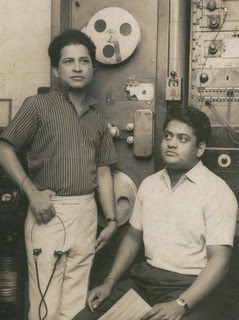
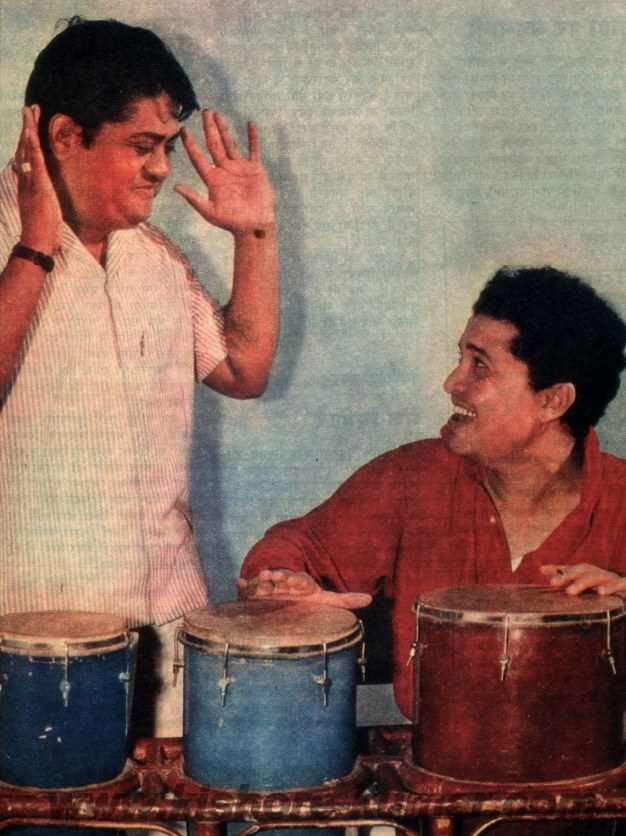
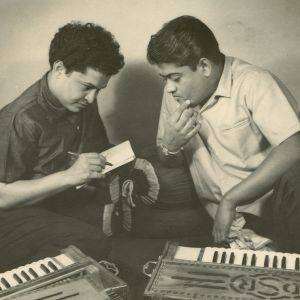
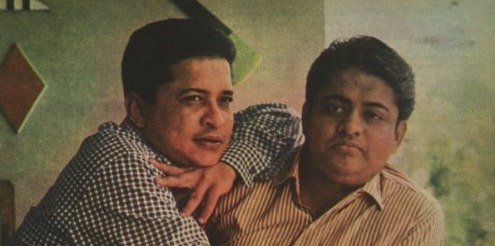
Pyarelal & Laxmikant

Both Laxmikant-Pyarelal have worked together as an assistant with R D Burman (Chhote Nawab ) and Kalyanji-Anandji (Chhaliya, Poornima, Satta Bazar, Mehandi Lagi Mere Haath, Bluffmaster, Himalay Ki God Main, Jab Jab Phool Khile, and many), Usha Khanna and Ramlal. 

It was 1952. Sometimes Pyarelal used to be indulged in playing cricket on the ground after working in the studio with the other people. On one of these occasions, Laxmikant came and asked them whether he could join in, and everyone agreed. That’s how Laxmikant and Pyarelal first met. Laxmikant was 15 and Pyarelal was 12 years old at that time. There ware a lot of people like the two of them, but most of the other players were older. In those days most songs were recorded with just eight to ten musicians. Laxmikant and Pyarelal being small were made to play standing on chairs! Comparable age and very poor financial background gave birth to a tight friendship between Laxmikant and Pyarelal. 

When Laxmikant was 10-11 years old, he had to play the mandolin in a Lata Mangeshkar concert in Radio Club Colaba. His beautiful and polished playing did not go unnoticed. The legendary Lata herself called Laxmikant after the show and inquired about him. After learning of his financially poor background, Lata recommended Laxmikant’s name to great music directors like Shankar Jaikishen, S. D. Burman and C. Ramchandra.

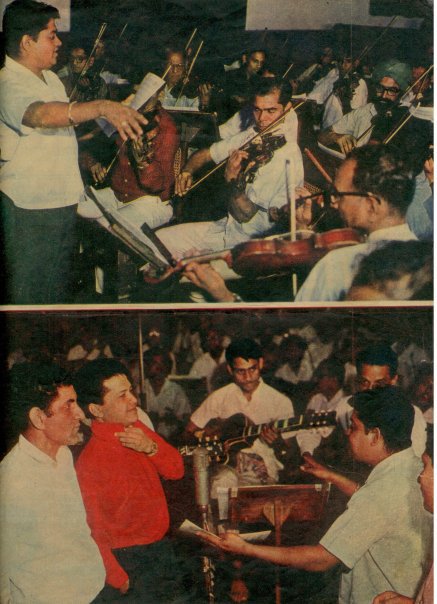
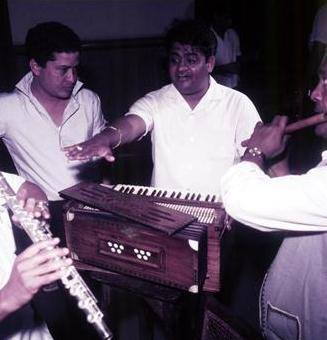
Top, Pyarelal conducting the orchestra. Bottom, Anand Bakshi, Laxmikant, Gorakh Sharma, Pyarelal 

Both Laxmikant & Pyarelal have a strong bonding at Sureel Bal Kala Kendra, a music academy for children, run by the Mangeshkar family. It was named after a gang of Sureela boys including Laxmiji, Pyareji, Lataji’s younger brother, Hridaynath Mangeshkar, Usha Mangeshkar, Meena Mangeshkar, Laxmiji’s brother Shashikant,  Pyareji’s brothers Anand, Ganesh and Gorakh as well as few friends, totaling 15 young boys. The sureela boy’s gang hung around together at Lataji’s home, day and night absorbed in the notes of golden music, intoxicated by rhythm and melody. Actually, Laxmikant-Pyarelal 'name' emanated from Lata Mangeshkar House. 

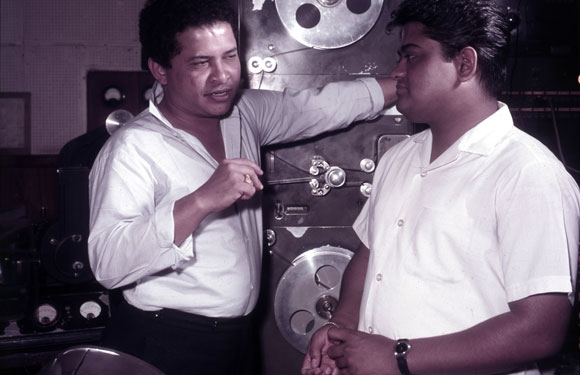
Laxmikant-Pyarelal

Laxmikant and Pyarelal started to get work for each other and also play together whenever they had the opportunity. Due to bad payment to musicians from the music directors in Mumbai in those days, Laxmikant and Pyarelal even went to play in Madras. In between, Pyarelal had even decided to leave India and go to Venice to play for symphony orchestras, similar to his colleague, the renowned conductor Zubin Metha. However, Laxmikant discouraged him from doing this. Even renowned mastros like Pt. Hariprasad Chaurasia (flute) and Pt. Shivkumar Sharma (Santoor) were their colleagues and at that time were indulged only in playing at rather than composition. Slowly, the pair that had now got recognition got an opportunity to assist music directors Kalyanji-Anandji in 1953. Once during this tenure, the absence of Kalyanji Anandji’s regular arranger Sebastian D’Souza gave Pyarelal the opportunity to be arranger for one of the songs. Pyarelal showed unusual prowess in this. It was LP then, who became the assistants of Kalyanji Anandji. 

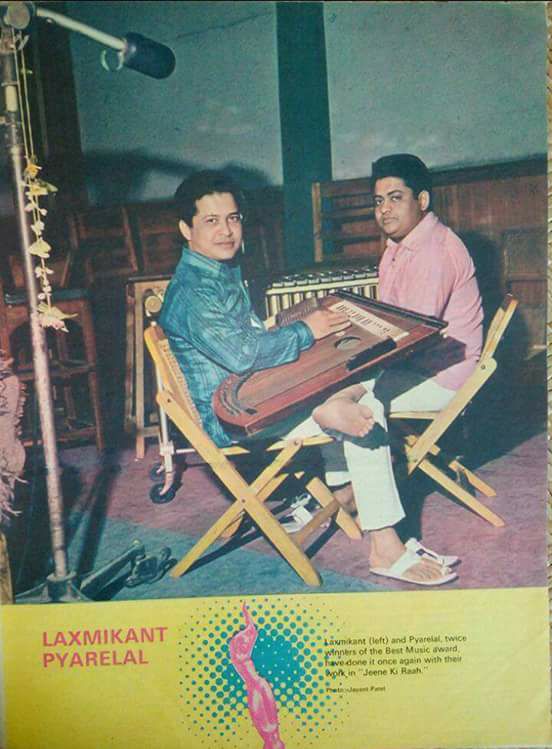
1969, Best Music Director Award for “Jeene Ki Raah”. Laxmikant-Pyarelal. Filmfare Magazine Picture, March, 1970. 

Simplicity, Commitment and the quality of Unconquered Versatility gave Laxmikant-Pyarelal a Supreme Staying Power of 35 years in the Hindi Film Music.

Laxmikant-Pyarelal’s tunes used to be very simple but at the same time it used to be extremely sweet, catchy and melodious

LP had an excellent sense of what would work at the common man’s level and in cinema halls, more than in Internet forums. They had a vast command over Folk and Hindustani Tunes. L-P (Laxmi-Pyare), were the composers who excelled, consistently, for  more than three decades,  in all forms of film songs such as Classical, Folk, Qawwali, Mujra, Western, Lori, Bhajan and Ghazal etc. They were also outstanding at exploiting several instruments, including their favorite Dholak, Tabala and also the Violin, Guitar, Bongo and Piano, Santoor, Sitar, Mendolian and many Indian as well as  Western instruments. 

Laxmikant-Pyarelal’s music is of the common people, for the common people and inspired by the common people. It was a perfect music for any successful film to have.

::: LAXMIKANT-PYARELAL ::: (1963 – 1998) : :::  THE SPARKLING JOURNEY OF an LP ERA ::: 

Unstoppable Flow of Passion and Talent. 

In 1963, noted film maker Mr. Babubhai Mistry gave a chance to Laxmikant and Pyarelal to score the music independently for the film “Parasmani” which released in 1963. They started the music director’s name as Laxmikant-Pyarelal.… (LP in short). The LP era has now started. All the songs of the film became immensely popular. Songs like Hasata Hua Nurani Chehara, Wo Jab Yaad Aaye, Mere Dil Main Halki Si etc. are still being hummed by the people even these are more than 58 years old. (as of October, 2020). 

After that Laxmikant-Pyarelal got the “B Grade” films, to score the music. Films like “Sati Sawitri”.(Songs:-.Tum Gagan Ke Chandram Ho,.. Jeevan Dor Tumhi Sang Bandhi,..Kabhi To Miloge, Intani Jaldi Kya Hai Gori )… “Sant Gyaneshwar” (Songs:- Jyot Se Jyot Jagate Chalo,.. Khabar More Na Line)… “Hum Sab Ustaad Hai”…(Songs:- Pyar Batate Chalo,… Ajanabi Tum Jane Pehachane Se,)...”Mr. X In Bombay”..(Songs:- Mere Mehaboob Quayamat Hogi,.. Chali Re Chali Re Gori,…Khoobsurat Haseena..) .. “Shreeman Fantoosh”..(Songs:- Sultana Sultana Tu Na Ghabarana,…Yeh Dard Bhara Afasana). All these sweet and melodious songs became immensely popular and are still in demand even after 56 years.

Laxmikant-Pyarelal got the opportunity to score the music in Rajshri Films “Dosti” in 1964. (Songs:-Chahunga Main Tuze,.. Janewalo Zara,..Meri Dosti Tera Pyar,..Mera To Jo Bhi Kadam,..Rahi Manawa Dukhti Chinta,.. Gudiaya Hama Se Ruthi Rahogi..). All the songs became hit. Music of “Dosti” kept LP in top position in the Hindi Film Music. This position of Laxmi-Pyare remain unaffected and continued till 35 more years.

The LP era had now begun even when other older and established music directors of the golden era were still very much active. “Dosti” film music gave LP their first ever Filmfare Award (by beating Shankar-Jaikishan’s “Sangam” and Madan Mohan’s “Woh Kaun Thi”).. Then came “Lootera” a super hit musical non star cast film which is remembered only because of Lata Manageshkar’s super hit songs with Laxmikant-Pyarelal. 

After this victorious feat LP and success went together without a break or loss of continuity.

Laxmikant-Pyarelal


In 1966 LP started cementing their place in Hindi Film Music. LP’s first musical hit film, with big star cast, “Aaye Din Bahar Ke” was released, followed by “Pyar Kiye Jaa”. Truly speaking 1967 belongs to Laxmikant-Pyarelal, they not only confirmed the Number One position in Hindi Film Music, but also consolidated it with series of hits by one after another. Non star cast film “Farz” was LP’s first ‘golden jubilee’ musical hit followed by big star cast films like “Anita”, “Shagird” yet another ‘Golden Jubilee’ hit. “Patthar Ke Sanam”, “Night In London”, “Jaal” and another evergreen musical hit “Milan”. Laxmikankt-Pyarelal received their second Filmfare Trophy for “Milan” without any stiff competition.

Now this was the time that Laxmikant-Pyarelal’s music became an essential component of the every successful film

Big film producing names, like Prasad Productions, Rajashri Productions, K Sridihar, Rajkumar Kohli, Mohan Saigal, J. Om Prakash, Raj Khosla, Mohan Kumar, S. Mukharjee, Manoj Kumar, Ramamand Sagar, Harmesh Malhotra, R K Nayyar (Actress Sadhana’s Husband), Ravi Tondon, Tirupati Pictures (Jeetendra), Bikramjit Films (Dharmendra), Surinder Kapoor (Anil Kapoor), Yash Johar(Karan Johar’s Father), including V.Shantaram, Raj Kapoor, Yash Chopra, Manmohan Desai, Subhash Ghai and many more, started replacing their regular music directors and preferred Laxmikant-Pyarelal on regular basis and in return LP have given an outstanding music to justify the replacement with big names. 

Entire list of the LP’s film will be too long but just to highlight the names of a few more films with hit music such as Raja Aur Rank, Taqdeer, Jeene Ki Raah, Do Raaste, Mere Humdam Mere Dost, Jeevan Mrityu, Piya Ka Ghar, Aaya Sawn Zumake, Uphar, Dharati Kahe Pukark Ke, Dushman, Hathi Mere Saathi, Humjoli, Mera Gaon Mera Desh, Sharafat, Jigari Dost, Abhinetri, Shor, Roti Kapda Aur Makaan, Aan Milo Sajna, Raja Jani, Dost, Meheboob Ki Mehendi, Daag, Bobby, Loafer, Pratigya, Imtihaan, Khilona, Majboor, Dharam-Veer, Chacha Bhatija, Roti, Prem Kahani, Anurodh, Satyam Shivam Sundaram, Amar Akbar Anthony, Gautam Govinda, Aasha, Badaltey Rishtey, Suhaag, Desh Premee, Sargam, Karz, Kranti, Mian Tulasi Tere Angan Ki, Prem Rog, Ek Duje Ke Liye, Ek Hi Bhool, Sur Sargam, Hero, Pyar Jhukta Naheen, Utsav, Aakhri Raasta, Naam, Nagina, , Inquilaab, Hum, Tezaab, Naam, Meri Jung, Eeshwar, Ram Lakhan, Chalbaaz, Mr. India, Khuda Gawaah, Saudagar, Khalnayak, Bhairavi, Deewana Mastana etc. and many more are enough to realize the potential of the LP duo to churn out hit music over a continuous stretch in time. The pair gave music to approximately 500 films in the 35 year span. Most of the composed songs carried the fragrance of beautiful melody.

:: LAXMIKANT-PYARELAL :: Song Composing Culture / System. 

The songs composed by Laxmikant-Pyarelal. it is very difficult to Judge / Find which song is composed by Laxmikant OR which song is composed by Pyarelal. It’s still remains the secret

PHILOSOPHY OF SONG COMPOSITION 

One must understand how Laxmikant-Pyarelal used to compose the songs. Most of the Music directors pairs will compose the song separately / individually, under the respective banner like wise, Shankar-Jaikishan or Kalyanji-Anandji

Interestingly, Laxmikant was the follower of Jaikishan style, not only in music but also in following Jaikishan’s wearing of wrist watch, cloth etc. Whereas Pyarelal was a follower of Shankar style of music. 

Both Laxmikant and Pyarelal were complete musicians. Both of them knew the art of film song compositions as well as the orchestra arrangements. Both of them were capable of extracting the “best” from the singers as well as from the musicians. 

In particular Pyarelalji, other than his proficiency in conducting the orchestra, he was an adroit in eliciting impishly rendering from the singers. For example, Lata Mangeshkar’s solo songs,  ‘नींद निगाहों से खो जातीहै मुहोब्बत मुहोब्बत (Lootera 1965). The मुहोब्बत word was repeatedly rendered 58 times, each time in different way.   बिंदिया चमकेगी sssss (Do Raaste, 1969), giving the stress on चमकेगी.  चलो sss सजना (Mere Hamdam Mere Dost, 1968), rendering the word  चलो sss, romantically.   मैं तेरे इश्क़ मैं मर न जाऊं ssss  कभी and many more. 

The act of song compositions of Laxmikant-Pyarelal, still remains a secret.  No one could guess which is Laxmikant composition or which is Pyarelal composition. It was a complete team work. All songs have an “LP” stamp. No THIRD person was involved.

Laxmikant-Pyarelal

Laxmikant-Pyarelal have composed over 2900 songs, according to change of time and the situation demands, for nearly 500 films ( a record ), in the span of 35 years. It should be noted that Laxmikant-Pyarelal were consistent in delivering top hit songs. 

Laxmikant-Pyarelal songs are available for all the Indian festivals, including Eid, Easter and Christmas. Laxmikant-Pyarelal songs are for all generations. Laxmikant-Pyarelal songs are available for any situations. If any Radio station starts playing Laxmikant-Pyarelal songs 24 hours X 7 days, none of the songs will be repeated. Such an enormous quantity of popular songs with quality, variety and melody, as well. Unfortunately, there is no any media support for Laxmikant-Pyarelal songs.

In SIXTIES (1963 to 1969), Laxmikant-Pyarelal gave tough challenges to Old Horses like Shankar-Jaikishan, O P Nayyar, Madan Mohan, Roshan, Ravi, Chitragupt, Hemant Kumar, Kalyanji-Anandji, etc. Conquered Number ONE position in the year 1967.

In SEVENTIS (1970 to 1979) Laxmikant-Pyarelal’s position remain unaffected, maintained number ONE position but this time Laxmikant-Pyarelal’s competitors were, R D Burman, Kalyanji-Anandji, Ravindra Jain, Rajesh Roshan, Khayyam (after 1976)

In EIGHTIES (1980 to 1989) Laxmikant-Pyarelal’s position still remained the same, maintaining number ONE position but this time the challenges were from Bappi Lahiri, Rajesh Roshan, Khayyam, Anand Milind and to some extent R D Burman (till 1985).

In NINETIES (1990 to 1998) Laxmikant-Pyarelal were right ton top till 1994. But this time LP’s competition was with New generation music directors like, Anu Malik, Anand-Milind A R Rehman and Nadeem-Shravan.

The Long Playing Record / 50 Years of Friendship of Laxmikant-Pyarelal broken on 25th May, 1998 when Laxmikant died.

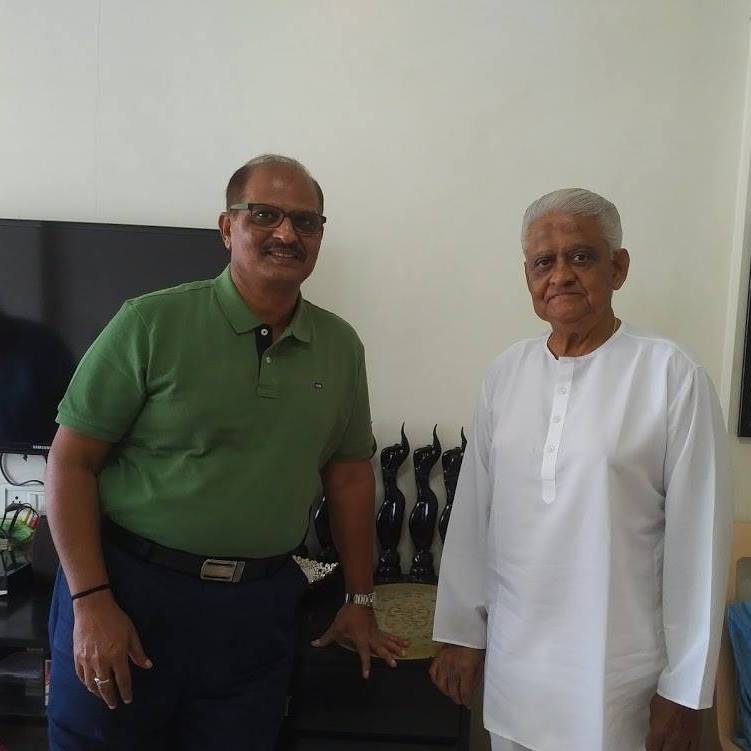
Ajay Poundarik & Pyarelal (Laxmikant-Pyarelal)

In this web / blog, I have tried to incorporate Laxmikant-Pyarelal associations with Singers, Songwriters, Filmmaker, Filmfare Awards. Binaca Geetmala, Few Films Music Review, Variety of Songs composed etc. Hope ! Music Lovers will enjoy it. I will appreciate the feedback, either way, in comment box. 

AJAY POUNDARIK

ajaypoundarik   


I am a Mechanical Engineering Graduate. Boiler Proficiency Engineer.
Deeply In Love With Hindi Film Music When I Was Eight Years Of Age, Since 1963. 
I Have A Liking For All Contemporary Music Directors Compositions. 
I Am A Fan Of Laxmikant-Pyarelal Music. I Have Grown-Up By Listening To 
Laxmikant-Pyarelal Music. I Like Test Cricket Only. Worked In The 
Capacity Of General Manager For The Fields Of Project Implementation, 
Facility Management, Construction Management and Plant Maintenance 
In INDIA, NIGERIA & AFGHANISTAN. 


३ सितम्बर  जनमदीन की शुभकामना #प्यारेलाल (#लक्ष्मीकांतप्यारेलाल) #LaxmikantPyarelal

 जनमदीन की शुभकामना   #प्यारेलाल (लक्ष्मीकांत-प्यारेलाल) #LaxmikantPyarelal    ३ सितम्बर लिविंग लीजेंड, हिंदी फिल्म संगीत  सबसे लोकप्रिय औ...