Wednesday, September 28, 2022

BHARAT RATNA Lata Mangeshkar & Her Unique Partnership With Laxmikant-Pyarelal

  1. BHARAT RATNA  Lata Mangeshkar & Her Unique Partnership With Laxmikant-Pyarelal


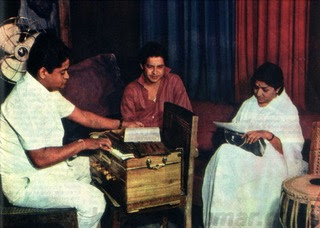
 “Sureela Bal Kala Kendra” was run by a group of children, aged below 15. It consists of child musicians Hridaynath Mangeshkar (team leader), Ushah Mangeshkar, Pyarelal Ramprasad Sharma (Pyarelalji) and all his younger brothers, Ganesh, Gorakh. Later joined by Laxmikant Shantaram Kudalkar (Laxmikantji) his younger brother Shashikant and many more.  The “Sureela children’s gang”  hung around together at Lataji’s home, day and night absorbed in the notes of golden music, intoxicated by rhythm and melody.


Both Laxmikant and  Pyarelal have a strong bond at “Sureela Bal Kala Kendra”, run by the Mangeshkar family.. Their friendship started from Lata Mangeshkar’s house. Laxmikant-Pyarelal name emanates from the house of Lata Mangeshkar.


Lata Mangeshkar have sung as many as 712 songs, under the music directors Laxmikant-Pyarelal, a record. What mind boggling variety and range did we get in those 712 numbers which included chart-slammers and classics, and chaalu numbers as well as connoisseur choices. It is impossible to find that variety and that sustained excellence without monotony in the output of any other composer, with Lata or with any other singer. 


We get  the unmatched variety of songs of Laxmikant-Pyarelal with Lata Mangeshkar. There are many films in which Mangeshkar has sung more than 4 - 5  songs in the film.. See below the list, 4 or more songs. ..sheer variety. 


Parasmani 1963

Sati Savitri 1964

Sant Gyaneshwar 1964

Lootera 1966 

Intequam 1968 (Two Brilliant Cabaret songs)

Baharon ki Manzil 1968

Sharafat 1970

Abhinetri 1971

Jal Bin Machhali Nritya Bin Bijalee 1971 

Mera Gaon Mera Desh 1972..

Raja Jani 1972
Daag 1973

Bobby 1973 

Satyam Shivam Sundaram 1978 

Ek Duje Ke Liye 1981  


In “Sant Gyaneshwar”, 1964, Laxmikant-Pyarelal has made Lata Mangeshkar sing for five different characters in the film and each song Lataji has diversified her singing.

An old lady : mere ladlo tum to  phoolo phalo

Child artist master Raju : ek do teen char bhaiya bano hoshiyar

Babloo : jyot se jyot jagate chalo

Surekha leading lady : khabar mori na lini, bahut din beete

“Lavani”, Marathi folk : main to chhel chhabili naar


From 1963 to 1973 Lata Mangeshkar recorded  355 songs ONLY under Laxmikant-Pyarelal. All are Simply superb…


Sati Savitri      1964


If we are to talk of LAXMIKANT-PYARELAL’s Classical or Semi-Classical Songs and that too with LATA MANGESHKAR ..songs of “Sati Savitri” stands out to be number 1….Lata has sung as many as Six songs ( four Solos) and all are based on classical ragas…The songs of this film can be heard even today. The meaningful wordings of these immortal songs are written by PANDIT BHARAT VYAS.


Tum Gagan Ke Chandrama Ho.Lata Mangeshkar -Manna Dey

Jeevan Dor Tumhi Sang Bandhi….Lata Mangeshkar

Itni Jaldi Kya Hai GoriLata Mangeshkar-Usha Mangeshkar-Kamal Barot.

Sakhi Ri Pee Ka Nam Na Puchho..Lata Mangeshkar

Kabhi To Miloge Jeevan Saathi. …Lata Mangeshkar.

Mujhe Loot Ke Na Jana ..Lata Mangeshkar


Kabhi To Miloge Jeevan Saathi.

Mind-Blowing in Raag KALAWATI. Beautiful use of SYMPHONY style orchestra arrangements (VIOLINS) in- between the song. It is difficult to choose which one is best song from "Sati Savitri ''…But I have chosen beautiful composition on raag 'KALAVATI'. The depth of emotions, soul and divine melody of this rendition in Rag kalavati is timeless and matchless.


Lootera     1965


I was just 10 years old when Raj Kumar Kohli’s “Lootera” was released. It was a musical hit movie. All the songs became immensely popular in 1965 & 1966. I listen to ‘Lootera” songs at least once a week.

All the songs of this film are written by Anand Bakshi and have different flavors and compositions. Every song has a different rhythm. We have Gazal, Chalu song, Western classical / Arabian Folk and Cabaret. A sheer variety of songs. 

As said earlier when we talk of Combo of Lata Mangeshkar & Laxmikant-Pyarelal, we always get different flavors in the songs. Songs of “Lootera” is one of them. Lata Mangeshkar has sung as many as 6 solo songs in this film. 

Kisi Ko Pata Na Chale 

Mujhe Dekhiye Main Koi 

Neend Nigahon Se 

O Dilwalo Saaze Dil Pe 

Raat Se Kaho Ruke Zara

Sanam Rah Bhoole


Kisi Ko Pata Na Chale Baat Ka.

A perfect Lata - LP stamped song…Use of DHOLAK is worth to listen to. Lata is simply the best. VIOLINS, CELLOs, MANDOLIN are awesomely orchestrated in the ‘interludes’


Intequam    1968


The picture was produced & directed by R K Nayyar actress Sadhana’s Husband. 

Powerfully orchestrated in all  the songs.. The songs are written  by Rajinder Krishan 

Lata Mangeshkar has sung 4 solo including two cebaret, + 1 duet with Rafi Saheb.. One totally intoxicated 


Aa Jaan-E-Jaa  (Cabaret)

Mehafil Soyee   (Cabaret)

Kaise Rahoon Chup

Geet Tere Saaz Ka

Hum Tumhare Liye


Kaise Rahoon Chup

Another drunkard song from “Inteqam” with “HICCUPs” as well as “CHOO-CHOO” sound naughtily rendered by Lata Mangeshkar. Here we find Sadhana getting drunk and singing / dancing a song in a party, much to the embarrassment of Sanjay Khan and Rehman. This soundtrack is still memorable today.  The “prelude” of 34 seconds is starts with ACCORDION and SYMPHONY style VIOLINS. The “Interludes” are awesomely orchestrated with LATA ji’s ‘intoxicated’ “AALAPS”, synchronised with  FLUTE, HICCUPS as well as VIOLINS in SYMPHONY style, ACOUSTIC GUITAR and ACCORDION . How beautifully the GUITAR auriculares are overlapped with Lata ji’s “CHOO-CHOO” sound (2.06 to 2.09) and also at (3.24 to 3.28).  Glimpses of ACCORDION are mellifluously used as “filler”. Not to forget the different type of “rhythm” created on BONGO DRUMS. Not to forget the elegant Helen’s presence in the song.


Abhinetri      1970

Producer who made “Shagird” earlier, had made this statement  that Ahmedabad field will support. 


Sa Re Ga Ma Pa 

Khiche Ham Se Saawarre

Sajna O Sajna 

O Ghata Sawari

Dhadkan Har Dil Ki 


ABHINETRI another musical hit film with as many as  six  songs sung by Lata Mangeshkar. This one will always remain the  best.  A Yoga song.


O Ghata Sawari Thodi Thodi Bawari    


Magnetizing “prelude" of 57 seconds, with symphony style VIOLINS , JAZZ FLUTE, SANTOOR, GLOCKENSPIEL and Lata's Humming Sound.  How delicately and tunefully Laxmikant-Pyarelal orchestrated the synchronization of Lata's voice with beautiful glimpses of JAZZ FLUTE, is just enthralling as well as creating the rainy season effect and also sets the mood of the song.  All the "interludes"  are with different tunes. In second ‘interlude’ creating WATER SOUND  is killer.  Glimpses of JAZZ FLUTE , as filler, in between the song + "pause" and the western style rhythm s has made this song a special. Filmed on the actress Hema Malini, performing YOGA


Jal Bin Machhli Nritya Bin Bijlee        1971


It was not an easy job to enter into V. Shantaram Camp. He has his own choice of music directors which was limited to 2 to 3. Many BIG names of Music Directors of Forties, Fifties, Sixties and Seventies, could not got the chance to work with V. Shantaram. It was in 1970..LAXMIKANT-PYAREAL got an opportunity to work for the first and last time for V Shantaram’s "classic" film "JAL BIN MACHHALI NRITYA BIN BIJLI". V Shantaram was having lean period after two flops “ Sehra” and “ Boond Jo Ban Gayi Moti” and for Laxmikant-Pyarelal it was an opportunity to work with an critically acclaimed director - and to show their prowess in hitherto new field - a Dance Musical.The outcome was outstanding. 


FIRST TIME FOR HINDI FILM MUSIC all the songs of this films were recorded in ""Stereophonic Sound System"". 


Lata Mangeshkar has sung as many as FOUR solo songs in addition to TWO duets with Mukesh. Mukesh has sung one song which became an immense hit. 


If you look at this JBMNB Album, all the songs are composed in a different style. Each song has a different ‘rhythm’. The orchestra arrangements for all the songs is just mesmerizing. It is one of the finest musical album for the unique combo of Lata Mangeshkar and Laxmikant-Pyarelal. 


LAXMIKANT-PYARELAL, have synchronized as well overlapped LATA MANGESHKAR’s voice in the highly rich orchestra arrangements. All the songs have different composition and different RHYTHM as well. On the top of everything…the chemistry of Lataji & LP worked miracle.  

An outstanding music


Man Ki Pyas Mere Man Se  …                       

Kajara Laga Ke Re Bindiya ….                     

O Mitwa O Mitwa      …                               

Jo Main Chali Phir Na Milungi..                    

Baat Hai Ek Boond Si..                                     Lata-Mukesh

Taron Ne Sajake                                        


Kajara  Laga Ke  Re Bindia Saja Ke.. 


A song on “MAYUR DANCE”. One more gem of composition with a different style. 

HOW THIS SONG WAS COMPOSED >> 

A Story narrated by PYARELAL ji


When Actress  SANDHYA ( wife of V SHANARAM )told Laxmikant-Pyarelal and MAJROOH to write the words, compose the song and the Rhythm by watching her dancing steps.


कजरा लगाके रे बिंदिया सजाके !! हो आई में तो आई रे आई लायी मोहे लायि मिलन धुन पिया की !!. .A long musical session was held between V. Shantaram, Actress Sandhya, Laxmikant-Pyarelal and Majrooh Sultanpuri. Actress Sandhya first demonstrated the dance steps, performed the full dance and then told Laxmikant-Pyarelal to prepare the tune and rhythm by watching her steps. It was a different and unique style to compose the song. BUT Laxmikant-Pyarelal along with LATA MANGESHKAR and Majrooh came out with an outstanding composition.A song on MAYUR DANCE. One more gem of composition with a different style. FLUTE is prominently used in western style. Perhaps the longest “prelude” 3 minutes and 27 seconds of a beautiful dance sequence. This song is a GEM. FLUTE and SANTOOR, VIOLIN, VIOLA and GUITAR are prominently used and synchronized as well as overlapped, in western style orchestra arrangements with different style of rhythm with DHOLAK. Also don’t forget to listen to the “postlude” of the song and “Mayur Dance”.


Ajay Poundarik
Vadodara 

Saturday, July 30, 2022

अजेय लक्ष्मीकांत-प्यारेलाल और श्रुतिमधुर मोहम्मद रफी


अजेय लक्ष्मीकांत-प्यारेलाल और श्रुतिमधुर  मोहम्मद रफी

                                                (कुछ ब्लैक एंड व्हाइट "रोमांटिक गाने")


 ३१ जुलाई को  महान गायक मोहम्मद रफी का स्मृति दिन  है।


"पारसमणि" से मोहम्मद रफ़ी साब और लक्ष्मीकांत-प्यारेलाल के बीच एक लंबे पार्टनरशिप की शुरुआत हुई। 1963 में फिल्म निर्माता बाबूभाई मिस्त्री ने कम बजट के कॉस्ट्यूम ड्रामा “पारसमणि’ के लिए संगीत तैयार करने के लिए लक्ष्मीकांत-प्यारेलाल को साइन किया। लक्ष्मीकांत-प्यारेलाल ने सोचना शुरू किया कि किस गायक को चुनना है। एलपी की स्वाभाविक पसंद मोहम्मद रफी थे। 


मोहम्मद रफ़ी के दो गाने "वो जब याद आए, बहुत याद आए" , (लता मंगेशकर) और "रौशन तुम्हीसे दुनिया"  बहोत पॉपुलर हुए ! “पारसमणी” के संगीतसे लक्ष्मीकांत-प्यारेलाल की  जोड़ी धमाकेदार शुरुआत की.  लिए प्रसिद्धि लाई।


लक्ष्मीकांत-प्यारेलाल के लिए सफलता आसान नहीं थी, क्योंकि उन्हें बढ़ावा देने के लिए उनके पास कोई गॉडफादर नहीं था। दोनों ने बी ग्रेड फिल्मों से शुरुआत की थी, जो कभी रिलीज ही नहीं हुई। उन्हें पहली सफलता फिल्म “पारसमणि” से मिली। “दोस्ती” ने उन्हें फुल फ्लैग्ड म्यूजिक कंपोजर के रूप में स्थापित किया। इन दोनों फिल्मों का सबसे अनोखा पहलू यह था कि इनमें अज्ञात अभिनेता थे जिनके लिए लक्ष्मीकांत-प्यारेलाल और रफी साब ने ए ग्रेड प्रदर्शन दिया था। गीत चाहूंगा में तुझे', जिसके लिए रफी साब और गीतकार मजरूह साब ने फिल्मफेयर पुरस्कार जीते थे, को साउंडट्रैक से हटा दिया जाना था। यह रफी साब ही थे जिन्होंने लक्ष्मीकांत-प्यारेलाल को गाने को रखने के लिए जोर दिया और यह कितना महत्वपूर्ण निर्णय था.


दोस्ती के संगीत से  लक्ष्मीकांत-प्यारेलाल नाम और प्रसिद्धि मिली। दोस्ती के संगीत ने लक्ष्मीकांत-प्यारेलाल को शीर्ष संगीत निर्देशकों के रैंक में बिठा दिया। रफी साब  लक्ष्मीकांत प्यारेलाल की रचनाओं से इतने प्रभावित हुए कि उन्होंने गाना गाने के लिए सिर्फ एक रुपया लिया था  


लक्ष्मीकांत-प्यारेलाल जीवन भर रफी साब  के पक्के वफादार रहे। उनकी महानता उनकी सादगी, प्रतिबद्धता और निर्विवाद बहुमुखी प्रतिभा की गुणवत्ता में निहित है, जिसने लक्ष्मीकांत-प्यारेलाल को हिंदी फिल्म संगीत में 35 वर्षों की सर्वोच्च रहने की शक्ति प्रदान की।


रफ़ी साब के साथ लक्ष्मीकांत-प्यारेलाल का साथ  उनके अंतिम दिन, 31 जुलाई, 1980 तक जारी रहा। 70 के दशक की शुरुआत में रफ़ी साब के नाजुक वर्षों के दौरान मदन मोहन के अलावा लक्ष्मीकांत-प्यारेलाल उनके साथ खड़े थे। दोनों ने साल 1977 में रफी साहब को वापसी दिलाने में अहम भूमिका निभाई थी। “अमर अकबर अन्थोनी”, “धरम वीर”, “सरगम” और “लैला मजनू” (मदन मोहन) के संगीतने ये सिद्ध कर दिया. 


मोहम्मद रफी ने लक्ष्मीकांत-प्यारेलाल के साथ 183 एकल सहित 379 गाने गाए हैं। यह हिंदी फिल्म संगीत में किसी भी संगीत निर्देशक के तहत मोहम्मद रफी द्वारा गाए गए गीतों की सबसे अधिक संख्या है।


लक्ष्मीकांत-प्यारेलाल के साथ मोहम्मद रफी में से सर्वश्रेष्ठ का चयन करना बहुत मुश्किल है। यहां मैंने रफी-एलपी कॉम्बो से कुछ "ब्लैक एंड व्हाइट" युग के रोमांटिक गाने चुने हैं। इनमें से ज्यादातर गाने उस दौर के हैं जब लक्ष्मीकांत-प्यारेलाल अपेक्षाकृत नए थे। बस इसे सुनो। वे सभी मामलों में बस अद्भुत हैं।


1. अभी कमसीन  हो नादान हो..."आया तूफ़ान" 1964। (गीतकार असद भोपाली )


यह गीत "दोस्ती" से ठीक पहले रफ़ी-एलपी कॉम्बो के लिए एक "लैंडमार्क" है। बेहद 'कोमल' गीत, जिसे रफ़ी साब ने अपने अंदाज़ में बहुत ही उम्दा तरीके से गाया है। रफ़ी साब जिस तरह से "अभि कामसीन हो" को प्रस्तुत करते हैं, वह  मंत्रमुग्ध कर देने वाला है। पश्चिमी शैली के ऑर्केस्ट्रा के अलावा सभी "अंतराल" में वायलिन और एकॉर्डियन का उपयोग किया है.  मैंडोलिन का बहोत शानदार उपयोग , "प्रस्तावना" (interlude).  एक और इस गीत की सुंदरता और वोह है बीच में दिया गया "विराम" है। यह सभी रफी प्रशंसकों के लिए एक व्यसनी गीत है। असद भोपाली ने यह प्यारा रोमांटिक शब्द लिखा है।


2. तौबा ये नज़र ..."दिल्लगी" 1966       (गीतकार मजरूह सुल्तानपुरी)

44 सेकंड का "प्रस्तावना" (prelude) बहुत मधुर है, रफ़ी साहब की गुनगुनाहट, ध्वनिक गिटार और वायलिन। निर्दोष 'रोमांटिक' प्रतिपादन, सुंदर बोंगो ड्रम तेज लय। पहले और आखिरी 'इंटरल्यूड्स' ACCORDION और GUITAR के साथ ऑर्केस्ट्रेटेड हैं। दूसरा "अंतराल" रफ़ी साब ने गुनगुनाते हुए दोहराया है। गाने को मजरूह सुल्तानपुरी ने लिखा है।


3. मेरा यार बड़ा शर्मिला .."मिलन की रात" 1967   (गीतकार आनंद बक्षी)


इस गीत को रफ़ी साहब ने "रॉक एन रोल" शैली में सहजता से गाया है, जो बोंगो ड्रम 'लय' के साथ उनके प्रतिपादन को सिंक्रनाइज़ करता है। गाने की एक और खूबी यह है कि यह पूरी तरह से गिटार की झलक के इर्द-गिर्द बुना गया है, 'इंटरल्यूड्स' में और 'फिलर' के रूप में ऑर्केस्ट्रा के माध्यम से एक रोमांटिक एहसास पैदा करता है। इस गाने को आनंद बख्शी ने लिखा है। 1967 का हिट गाना "सही" पल में... जब दिवंगत मंसूर अली खान पटौदी लीड्स (यूके) में टेस्ट क्रिकेट खेल रहे थे, तो उन्होंने शानदार शतक (148 रन) बनाकर शर्मिला टैगोर को "प्रस्तावित" किया।


 4. जब जब बहार आई.."तकदीर" 1968  (गीतकार आनंद बक्शी))


रफ़ी-एलपी के संयोजन से सबसे प्यारा गीत में से एक। पूरे गीत को पियानो और एकल वायलिन (स्वयं प्यारेलालजी द्वारा बजाया गया) का उपयोग करके मधुर ढोलक / तबला 'लय' के साथ ऑर्केस्ट्रेट किया गया है। इस गाने के कई संस्करण हैं, जिसे विभिन्न गायकों ने गाया है, लेकिन रफी साब द्वारा गाया गया एकल सबसे अच्छा है। यह गीत सुंदर शब्द आनंद बख्शी द्वारा लिखे गए हैं।


5. आई बहारों की शाम .. "वापस" 1969  (गीतकार मजरूह सुल्तानपुरी)


ध्वनिक गिटार पर ताल के साथ पश्चिमी शैली की रचना संगीतमय कानों को मंत्रमुग्ध कर देती है। मधुर और भावपूर्ण गीतों के साथ सुंदर गीत। जब रफ़ी साब कोमल, सुकून देने वाले रोमांटिक गीत गाते हैं तो वह हमेशा सर्वश्रेष्ठ होते हैं। यहाँ भी उन्होंने अपने बेहद मधुर गायन…..प्यारी रचना के साथ जादू बिखेरने में कामयाबी हासिल की है। मजरूह सुल्तानपुरी ने गाने को लिखा है।


अजय पौंडरिक 

वडोदरा 


Friday, October 8, 2021

LAXMIKANT-PYARELAL Music Forever, BOOK REVIEW


 LAXMIKANT-PYARELAL Music Forever, BOOK  REVIEW

.


--------------------------------------------

Review of the Book

LAXMIKANT-PYARELAL Music Forever.

By P P Ramchandran.

------------------

Mr. P P Ramchandran, popularly known as Mr. PPR. Mr. PPR deserves all praise for his achievement especially at 83 + age. His name should be included in gunnies book of records. He is married to books, has more than 2000 books in his personal library at home. He has reviewed over 1000 books, in 50 years.

————————————

I have pleasure in forwarding my review of the book “
“Laxmikant Pyarelal, Music Forever” by Ajay Poundarik.
Do read and respond.

P.P.Ramachandran.
05/9/2021.
*****************************************************************
Laxmikant Pyarelal —–Music Forever by Ajay Poundarik ; Published by Blue Rose Publisher ; Pages 695 ; Price Rs 1500/- ************************************************************************
Speaking in the House of Commons on 20th August 1940 in the heart of the Second World War the British Prime Minister Winston Churchill declared, “Never in the field of human conflict was so much owed by so many to so few”, referring to the ongoing efforts of the Royal Air Force fighting the Battle of Britain.

Slightly amending the British Lion that roared we can say about Shri.Ajay Poundarik the author of the book under review — “ Never in the annals of Hindi film history was so much owed by so many to one individual”.

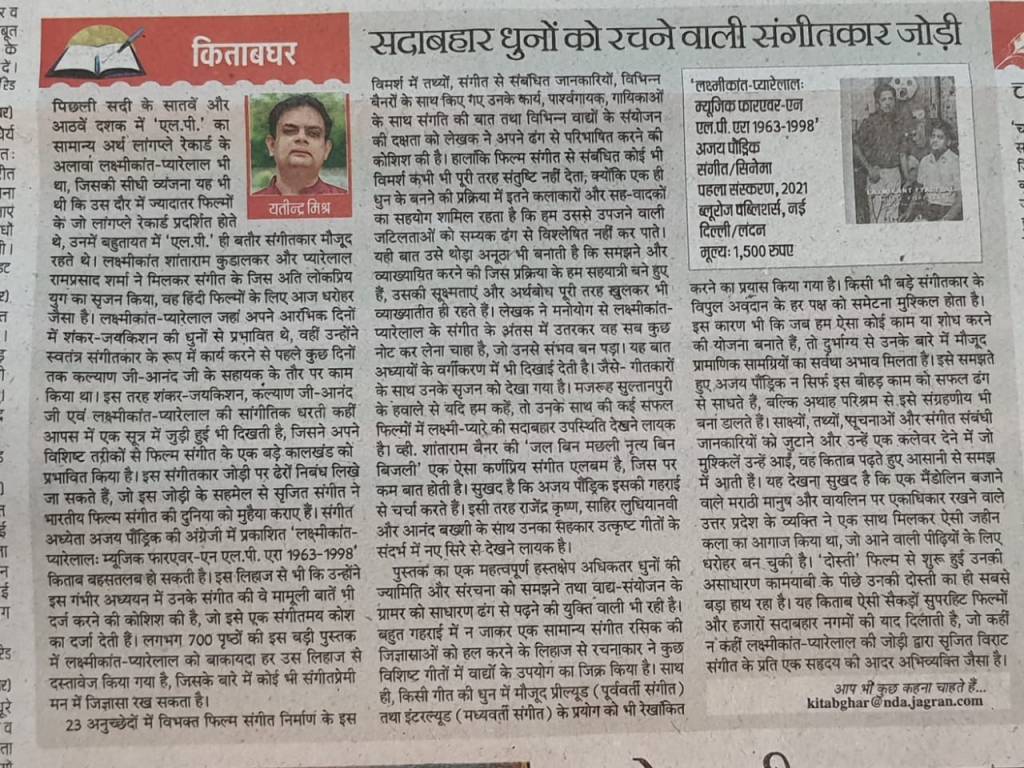
The book under review is “ Laxmikant—Pyarelal—Music Forever—An ‘L P’ Era ::1963—1998” .The book is a monumental work—the result of unremitting hard work—collecting, collating, arranging in a palatable form valuable information on the greatest musical duo of

Bollywood, who dominated the arena for over three and a half decades.

Laxmikant-Pyarelal is the name that needs no introduction in the field of Hindi Film Music or Hindustani Music. The name represents an archive of hit film music that was churned out non-stop right from 1963 till the end of the century. L–P— Laxmikant-Pyarelal duo was one of the few Hindi Film music directors refreshingly active for almost four decades.

L-P’s arrival in the Hindi Film Music world was during the year 1963 with the film “Parasmani”—a musical family drama partly black and white partly colour. It had no major star to boast of. The film was a Superhit with six super songs. This was followed by Dosti, Mr X in Bombay, Sant Gyaneswar and Sati-Savitri—all with outstanding songs sung even today.

This book vividly captures the magic generated by the characters that people the Hindi film world as also those behind the screen—the playback singers and music directors and directors of the golden era of the 1960s and 1970s. The genius of these towering personalities does not end with them- it provides a peep into a time that had a romance and artistic feel all of its own. With the author’s nostalgic lens the reader is led into a fascinating world of emotions, romance, melody and quite a different set of moral values that dominated in the world of Indian cinema.

To name a few items which the book highlights —Chetan Anand’s fine directorial ability, Raj Kapoor’s showmanship, Dilip Kumar’s perfection as the king of tragedy, Madhubala’s ethereal beauty and Dev Anand’s vibrancy.

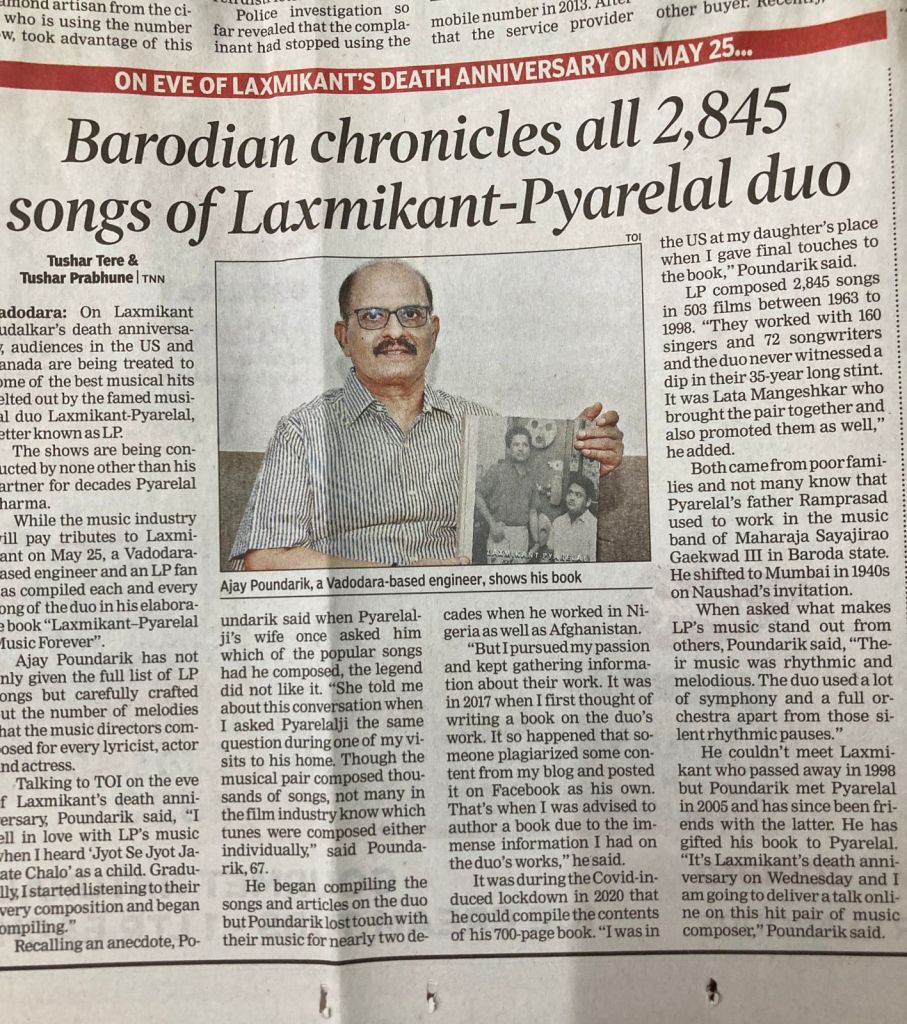
The colossal contribution of Laxmikant—Pyarelal is evidenced by the fact that the Duo gave music to 503 Films creating 2845 Songs, utilising 160 Singers and engaging 72 songwriters.

When the official history of Bollywood movies comes to be written an important place will be given to a Barometer that gauged the

popularity of the songs and that was the weekly programme Binaca Geetmala. The show was broadcast in 1953 by Radio Ceylon and the host was Ameen Sayani who had a mesmerising voice that was sweet and singsong. The programme gave ranks to the most popular Bollywood film songs according to sales in select shops in select cities.

The program captured the entire nation—-as later Ramayana did. Wednesday—8 to 9 p m was dedicated to Ameen Sayani who offered a feast for one hour with selected popular songs.

The songs soon were selected on the basis of Listeners’ Preferences.At the end of every year lists were compiled based on points earned by songs through the year, by airing it on weekly countdown programmes. These songs were the top hits of the year and was called Binaca Geetmala Final Songs.

Binaca Geetmala used to broadcast annual (Varshik) programme giving the orders of the top ‘Final Songs” songs of the year, at the end of every year.

If we count the “Final Songs” of Binaca Geetmala, from 1953 to 1993 the “Final Songs” numbers comes to 1259, in 40 years. Out of this LP captured a whopping 245 songs followed by Shankar Jaikishan with 144 songs. Eleven songs of L P appeared on TOP.

Another parameter was the Filmfare Awards. Ever since L-P entered into the Hindi Film Music in 1963 they were nominated for the Best Music Director for almost each and every year . Altogether L-P got 7 Filmfare Trophies, including Four Times in a row—1977/1978/1979/1980. Films are Dosti, Milan, Jeene Ki Raah, Amar Akbar Anthony, Satyam Shivam Sundaram, Sargam and Karz. 

Laxmikant-Pyarelal composed over 2900 songs for nearly 503 films in a span of 35 years. Pages 488 to 504 furnish a list of the Films for which the duo gave music from 1963 to1998. About 489 films.

Pages 505 to 695 gives a whopping list of 2844 songs.

What is astounding is that the author gives in this list the following details—Film / Year / Singers /Lyricists/ Number of films and the numbers of the songs.

The book covers every permutation and combination of L-P and singers, lyricists, film producers, even musical instruments—and offers these year wise. Binaca Geetmala awards, Filmfare Awards, etc are also furnished. Quite often songs are analysed in detail.

Nuggets of information are passed on gently.

There was a time when there was a rift between Laxmikant and Pyarelal and both of them almost decided to separate. Lata Mangeshkar, Naushad and Subash Ghai took the initiative and resolved the rift. Till date no one knows the cause of the rift.

An interesting story is connected with the song “My name is Anthony Gonsalves” from the film “Amar Akbar Anthony”. The original name of the character played by Amitabh was Anthony Fernandez. L-P wanted to give a tribute to Pyarelal’s violin guru—whose name was Anthony Gonsalves. They requested Manmohan Desai to change the character’s name to Anthony Gonsalves and he readily agreed and the song is a tribute to a violin teacher from Goa.

The reader is made to understand the great role of Laxmikant-Pyarelal in the world of Hindi Film Music.

The book of over 700 pages containing 92 different articles is a veritable feast.

The author Ajay Poundarik is an Engineer who has undertaken projects in Nigeria, Afghanistan and India.

One wishes the author had given brief biographies of both Laxmikant and Pyarelal. Also that he had employed a good proof reader.


P.P.Ramachandran. 5/9/2021

—————————————————————


                                              Maharashtra Times, Sept, 25, 2021

————————————————————————————

The Review Of Book :: 


LAXMIKANT-PYARELAL, Music Forever.


By Mr Manek Premchand,  Music Historian 

A Labour of Love The author has been in love with music since his childhood, but absolutely in love with the tunes of Laxmikant-Pyarelal, right since 1963, when the composing duo arrived with a bang in Parasmani. They soon became his heroes, as he says in the chapter Research, Book Writing and Acknowledgment. 

Reading the book itself—694 pages of content with hard-binding—is itself a huge task, so one can imagine how much more it must have taken for the author to put it together in the first place. As a writer myself, I can see what he has not talked about: the hundreds of pages of drafts, the sleepless nights, the obsession to carry on, deliver something of value. Thus, the book is clearly a labour of love. 

Yes, a lot of thought has gone into this effort, and the book is beautifully arranged from start to end. There is a listing, for example, on actors who lip-synched L-P’s songs (which are mentioned), with the author covering the major ones like Amitabh and Dharmendra of course, but not sparing even minor actors like Javed Jaffry, Laxmi Chhaya or Kimi Katkar. 

There’s excellent information on the use of musical instruments too. He tells us for instance, that in the qawwali Parda hai parda (Amar Akbar Anthony, 1977), the maestros used plenty of the mandolin, shehnai/naadaswaram, and synchronised these with the tabla/dholak. Did you know too that Main shair to naheen (Bobby, 1973), involved the use of the Iranian santoor, guitar, accordion and viola? Not just that, Poundarik sometimes even tells us who played the musical instruments in specific songs. As an example, from the same Bobby, the song Hum-tum ik kamre mein band hon featured the Iranian santoor played by Shivkumar Sharma and the accordion by Sumit Mitra.

The author has looked at the all-important harmonium, and listed out songs that featured the instrument on the screen too, not only in the songs composed by Laxmikant-Pyarelal, but by a range of musicians, right from Anil Biswas (Shukriya aye pyaar tera shukriya/Aaram, 1951) to Sonik-Omi (Raaz ki baat keh doon to/Dharma, 1975). That’s beautiful trivia, but there’s more of it sprinkled throughout the book. 

Did you know for instance that Sanjeev Kumar began his career as a police officer in Hum Hindustani (1960)? Or that actor Sanjay Khan started up in films around the same time as Laxmikant-Pyarelal? The author then weaves these actors with the music of these maestros.

There’s an exciting chapter on L-P’s creation of tunes based on Hindustani classical raags. You think of Roshan tumhi se duniya and Suno sajna papihe ne (both raag mishr Pahadi) or you read about their marvellous work in raag mishr Kalavati: Agar dilbar ki ruswaayi humen manzoor ho jaaye, as well as Kabhi to miloge jeevan saathi. These and many more are what you find as precious gems in this wonderfully elaborate book. 

In fact, the author has done exhaustive commendable work in a beautiful array of chapter headings, none more vital than the filmography and discography, listed at the end of the book. The author informs us through lists that Laxmikant-Pyarelal’s music was featured in over 500 films, including 14 regional ones, and they ended up composing 2844 songs. Whew! 

Among the book’s many merits though, there’s one downside in it: there are plenty of typos scattered through the book. These are in film titles, the songs, and most importantly in the read itself. This jars somewhat, taking away a bit from the remarkable read about the amazing music-composing team. Even so, it is a good book, especially for purposes of reference .


Manek Premchand Music Historian


३ सितम्बर  जनमदीन की शुभकामना #प्यारेलाल (#लक्ष्मीकांतप्यारेलाल) #LaxmikantPyarelal

 जनमदीन की शुभकामना   #प्यारेलाल (लक्ष्मीकांत-प्यारेलाल) #LaxmikantPyarelal    ३ सितम्बर लिविंग लीजेंड, हिंदी फिल्म संगीत  सबसे लोकप्रिय औ...